
London
East London. Where London is growing fastest.
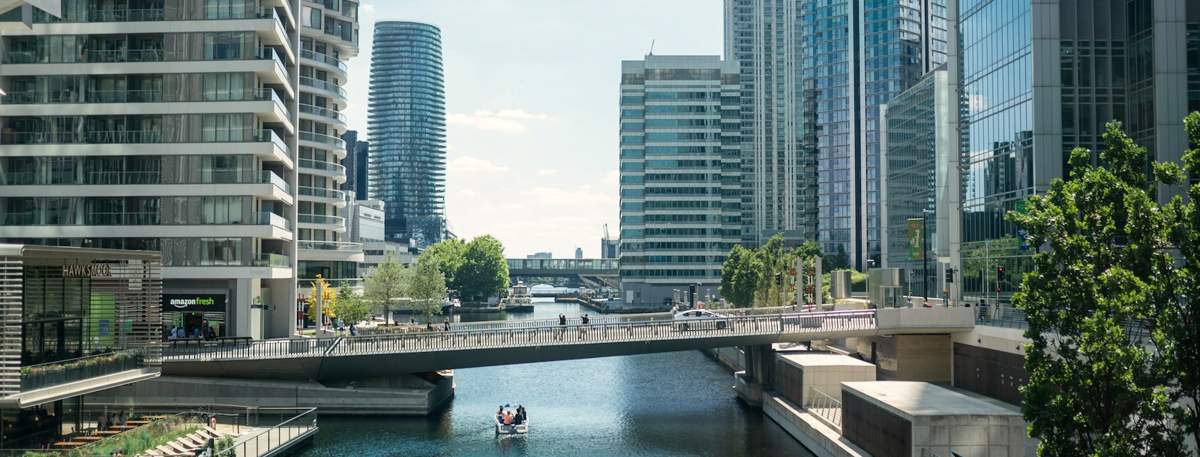
East London is where much of the capital’s new housing is being built. It has the largest Opportunity Areas, a high share of industrial land, and more build to rent than anywhere else in the UK. It also has some of the tightest constraints: river and rail infrastructure, flood risk, and industrial neighbours that new homes have to live alongside. Philip’s career includes riverside regeneration in East London.
Boroughs
Barking and Dagenham, the City of London, Hackney, Havering, Newham, Redbridge, Tower Hamlets and Waltham Forest.
What to consider
- Opportunity AreasThe Royal Docks and Beckton, the Isle of Dogs and South Poplar, the Lower Lea Valley around Stratford, and Barking Riverside are planned for large numbers of new homes and jobs, with infrastructure tied to the phasing.
- Industrial landEast London has large Strategic Industrial Locations. Some smaller sites may be released or intensified, but losing industrial capacity is resisted, and homes next to industry must be designed for noise and servicing.
- Flood riskMuch of the area by the Thames and the Lea is in the flood zones, which affects layout, ground floor uses and the sequential test.
- Build to rentStratford, the Royal Docks and the Isle of Dogs are major build to rent markets, with their own planning terms on affordable housing and covenants.
- The CityThe City of London is mainly offices, with conversion and refurbishment questions rather than land.
London-wide rules
How we help
- Feasibility studies: what the site or building could become, and what each option costs and returns
- Site identification: finding and securing the right site
- Development management: managing the scheme, including the planning process and the right planning consultant
- Delivery strategy for complex sites
- Project management
Common questions
Is my site in an Opportunity Area?
The London Plan maps them, and the borough’s local plan sets out the detail. Being in one usually means higher densities are expected and more infrastructure is involved.
Can homes be built next to industrial uses?
Yes, with care. The new homes must be designed so that existing industry can keep operating, which affects layout, glazing, ventilation and access.