
Sites and buildings
Barn and rural building conversions. Class Q or full planning?
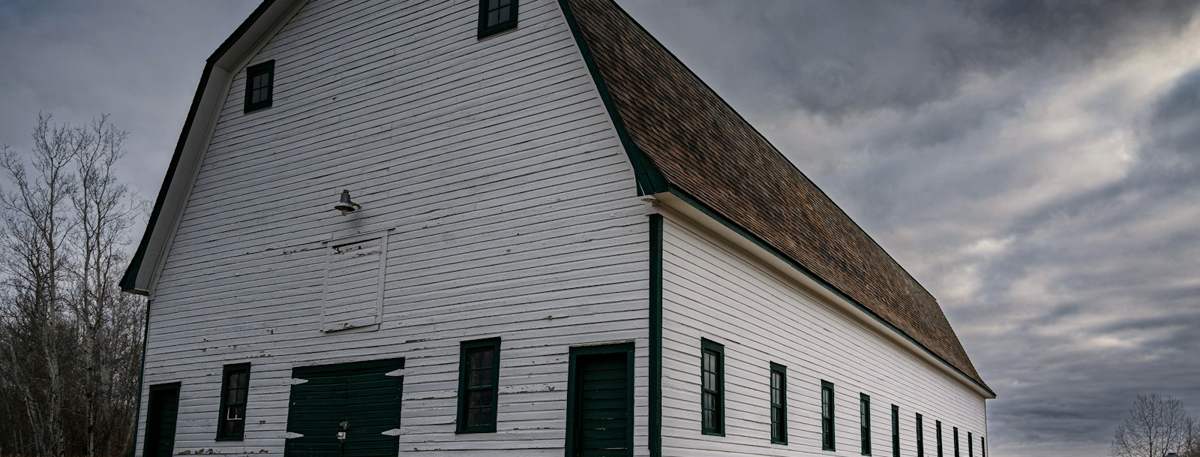
Converting a barn or other rural building to homes can unlock real value, but the cost and difficulty are often underestimated. The route matters first: whether the building can use the Class Q permitted development right, or needs full planning permission. Then the structure, services, access and ecology decide what it will cost and how long it will take.
Who it is for
For farmers and estates with buildings they no longer need, for buyers of barns with or without consent, and for investors and developers looking at rural conversions. Schemes range from a single barn to a group of buildings.
What to consider
- Class Q permitted developmentSince 21 May 2024, Class Q allows up to 10 homes from buildings on agricultural units and former agricultural buildings, with up to 1,000 square metres in total and no home larger than 150 square metres. A single-storey rear extension of up to 4 metres is allowed on existing hard surfacing, and the existing building must be able to meet the national space standard.
- Where Class Q does not applyIt cannot be used in conservation areas, National Landscapes (formerly Areas of Outstanding Natural Beauty), National Parks, the Broads, World Heritage Sites or Sites of Special Scientific Interest, or for listed buildings and scheduled monuments. Those buildings need full planning permission, judged against local policy on reusing rural buildings. Class Q can be used in the Green Belt.
- Prior approvalEven under Class Q, the council must approve the transport and highways impact, noise, contamination, flood risk, whether the location or siting makes the change impractical or undesirable, the design and external appearance, and the natural light in the homes. The council has eight weeks to decide, and the conversion must be completed within three years of approval.
- StructureClass Q covers conversion, not rebuilding. A building that would need what amounts to a new structure to become a home will not qualify. Steel-framed barns and solid walls usually convert better than open-sided pole barns, so a structural survey comes early.
- Services and accessWater, power, drainage (often a treatment plant rather than mains), broadband, and safe access and visibility onto the road can add significantly to the cost.
- EcologyBarns are often used by bats and barn owls. Surveys can only be done at certain times of year, so they need planning into the programme. Biodiversity net gain does not apply to permitted development, but protected species law still does.
- Value and costConverted rural homes can sell well, but conversion often costs more per square metre than building new. The VAT position on converting non-residential buildings and selling the homes can help the numbers; your accountant should confirm it.
The options
- Secure prior approval and sellAdd value with a Class Q approval or planning permission, then sell to a buyer or developer.
- Convert and sellCarry out the conversion and sell the finished homes.
- Convert and keepLet the homes, or keep one for the family.
- Full planning for a better schemeWhere Class Q is too restrictive, a planning application may allow more homes, more extension or a better design.
- Commercial use insteadThe separate Class R right allows some agricultural buildings to change to commercial, storage, light industrial or hotel uses, up to 1,000 square metres.
How we help
- Feasibility studies: what the site or building could become, and what each option costs and returns
- Site identification: finding and securing the right site
- Development management: managing the scheme, including the planning process and the right planning consultant
- Delivery strategy for complex sites
- Project management
Guides
Common questions
Does Class Q apply in the Green Belt?
Yes. Being in the Green Belt does not on its own stop Class Q, although the building and site still have to meet all the other conditions.
Can I knock the barn down and rebuild it under Class Q?
No. Class Q allows conversion, including the building work reasonably needed to make the building a home, but not a rebuild. If the structure cannot take the new use, full planning permission is needed.
How long does prior approval take?
The council has eight weeks from a valid application to decide. Surveys, especially for bats, can take longer to arrange than the application itself, so they should start early.
Is a barn conversion cheaper than building new?
Often not. Structural work, services, access and the care needed with an old building can make a conversion cost more per square metre than new build. The value of the finished home is what makes it worthwhile.